
-
4225 Florence Blvd
-
Appointments Recommended
Mon - Fri: 8:00am - 4:00pm
-
Schedule Your Appointment:
(402) 451-3400 - Request Quote
Mon - Fri: 8:00am - 4:00pm
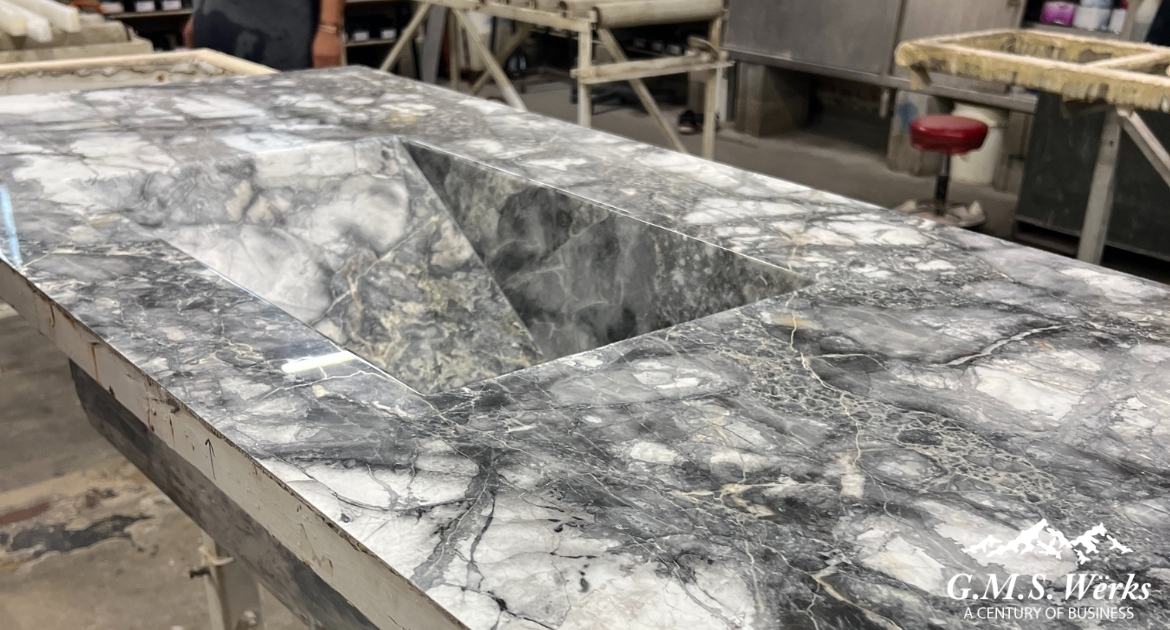
Natural stone is never static. Even in its calmest form, it carries subtle shifts in tone, soft lines, and organic patterns that bring life into a space. One of the most important characteristics to understand when choosing stone is movement, the way veining, color variation, and texture flow across the slab. Movement directly influences how a room feels, how light interacts with the surface, and how dramatic or understated the final design becomes.
Before selecting a stone, it helps to know the difference between high-movement and low-movement slabs, how to read a stone in the warehouse, and what those visual cues mean for long-term design.
High-movement stones are dynamic and expressive. They feature bold veins, sweeping patterns, dramatic shifts in color, and areas of intense contrast. Stones like Taj Mahal quartzite, Patagonia, Blue Roma, or certain marbles create a focal point instantly. Designers use these stones when they want the countertop or wall to act as the statement piece in the room.
High-movement slabs shine in spaces where the rest of the design remains clean and simple. A quiet cabinet style or neutral palette allows the stone to take the lead without overwhelming the room. Homeowners who choose these slabs should be prepared for the stone to set the tone of the entire space. It becomes art, not background.
Low-movement stones are more uniform and subtle. Their veining is soft, their color transitions are gentle, and they give the room a calm, steady foundation. Stones like honed marble, many granites, and soft taupe or cream quartzites fall into this category.
These stones work well in spaces where other elements, such as bold tile, dramatic lighting, or detailed cabinetry, carry more of the visual weight. Low-movement surfaces support the design without dominating it. They are versatile and timeless, making them a strong choice for homeowners who prefer longevity and a quieter aesthetic.
Seeing a stone online never compares to reading it in person. A full slab reveals patterns you cannot understand from a small sample.
When examining a slab:
• Start from a distance. Look at how the veins move across the entire surface. Do they sweep horizontally, rise vertically, or swirl in multiple directions?
• Get close. Notice small fissures, crystal structure, color deposits, and texture changes. These details matter when deciding where cuts will fall.
• Visualize placement. Consider what part of the stone will land on the island, around the sink, or at eye level. A dramatic vein may look best uninterrupted on a large surface.
• Check for bookmatch potential. High-movement stones can create stunning mirrored walls or shower features when cut properly.
A skilled artist can guide you through this process, helping you understand where the stone is strongest and where its beauty will matter most.
Ultimately, stone movement should match the personality of the room. Do you want the stone to speak loudly or softly? Do you want a centerpiece or a backdrop? Understanding movement turns the selection process from overwhelming to inspiring.
Whether bold or understated, the right veining brings clarity, cohesion, and character to the home. Natural stone does more than fill a space, it shapes it.


