
-
4225 Florence Blvd
-
Appointments Recommended
Mon - Fri: 8:00am - 4:00pm
-
Schedule Your Appointment:
(402) 451-3400 - Request Quote
Mon - Fri: 8:00am - 4:00pm
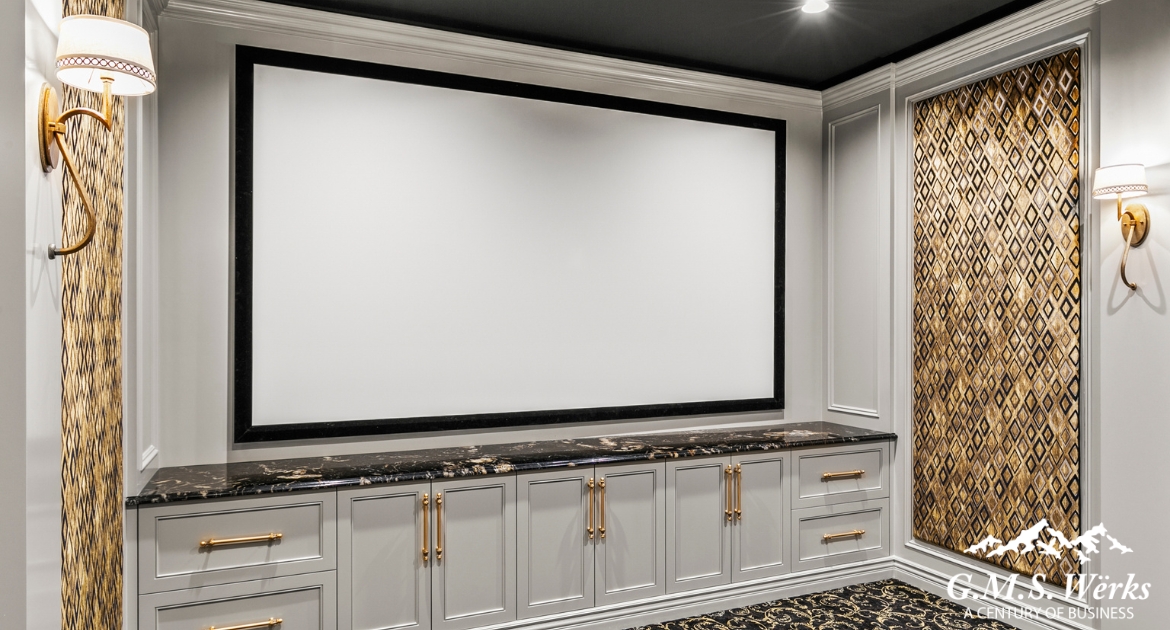
A home theater should feel intentional, not improvised. It is a room built for atmosphere, immersion, and comfort, and the materials you choose determine whether the space feels elevated or unfinished. In this theater, one design decision does the heavy lifting. The natural stone cabinetry top sets the mood, frames the room, and gives the entire space the presence you expect in luxury cinema design.
Lighting is low, sound is controlled, and the room is designed for long viewing sessions. Natural stone thrives in this kind of environment. Here, the slab sits below the screen like a stage. The dark base color absorbs light rather than reflecting it, keeping the focus where it belongs. Meanwhile, the gold and cream veining coordinates with the wall sconces and patterned panels, tying the warm palette together.
The stone adds visual weight without making the room feel heavy. It grounds the cabinetry and gives the front wall structure. Without it, the built-ins would fade into the background. With it, the room gains definition.
Home theaters can quickly become cluttered with equipment. This design avoids that. The stone countertop introduces movement and richness, but it remains controlled. The cabinetry stays neutral and clean. Together, they create hierarchy. The screen is the centerpiece. The stone is the supporting actor that elevates the entire set.
This is a smart approach. You do not need loud materials in a room built for watching films. You need materials that support the lighting, absorb contrast, and feel intentional. This stone does all of that. Viewers get a visually interesting room without distraction.
Look closer at the slab. The polished finish gives the theater a subtle sheen. Not reflective enough to compete with the screen, but smooth enough to read as refined. The deep base color adds depth, which every theater needs. The veining adds depth and movement, creating dimension even when the lights are dimmed.
These choices are not decoration. They are functional design decisions that influence the room’s atmosphere. A lighter or busier surface would completely change the experience. This slab strikes the balance.
One of this theater's strengths is how well the materials speak to one another. The gold hardware echoes the metallic tones in the stone. The patterned acoustic panels pick up the same warm notes. Even the carpet pulls from the same palette. Nothing feels random.
That is the difference between a theater that looks assembled and one that feels designed. The stone becomes the anchor that every other choice connects to.
This project shows how natural stone can shape more than countertops. It can frame a theater. It can set a tone. It can build mood. When chosen well, stone becomes part of the architecture rather than a simple surface.
A home theater is about experience. Materials matter. Here, the stone makes the room feel complete.


