
-
4225 Florence Blvd
-
Appointments Recommended
Mon - Fri: 8:00am - 4:00pm
-
Schedule Your Appointment:
(402) 451-3400 - Request Quote
Mon - Fri: 8:00am - 4:00pm
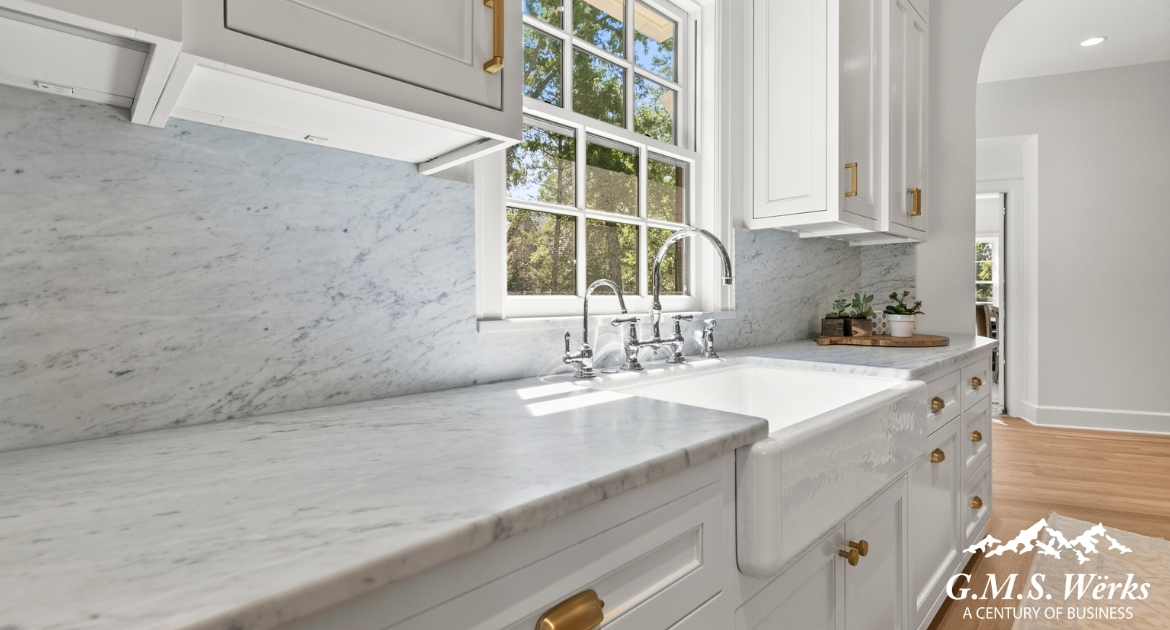
Stone fabrication looks simple when you see the finished result. The seams are clean, the veining flows naturally, and the surface feels like it was made for the space. But that level of precision does not happen by accident. It comes from a detailed process and a team that knows how to work with a material that offers no do overs. Natural stone behaves differently than man made marble, which is engineered for consistency, so fabricators must bring skill and judgment to every cut. Here is a clear look at what happens inside a stone shop from the moment measurements are taken to the moment the surface is installed.
Every project begins in the home with templating. A technician captures exact measurements of the cabinets, walls, and surrounding surfaces so the shop can create a digital or physical template. A wall that is slightly out of square or a cabinet run that dips a quarter inch can change how the stone needs to be cut. Good templating prevents guesswork later and ensures the slab is shaped to fit the home, not the other way around.
Once the template is complete, it is matched to the selected slab. This is where experience matters more than machinery. Natural stone has movement, veining, and personality, unlike man made marble which arrives uniform and predictable. A fabricator studies the slab and chooses where each piece should be placed so the final project feels intentional. Strong veins may be centered on an island. Softer areas might be used near a sink cutout. Any weak points or fissures need to be avoided entirely. This stage shapes the design long before cutting begins.
With the layout set, the slab moves to the saw. Modern shops use advanced saws that provide accuracy and speed, but they do not replace the judgment of a skilled fabricator. Some stones require slower passes, some chip if pushed too quickly, and some need specific blades to avoid stress fractures. Cutting man made marble is far more predictable, which is why many fabricators rely on it, but natural stone demands experience. This stage produces the rough components of the project, including sink openings, cooktop spaces, and the overall countertop shape.
This step separates true craftsmen from basic fabricators. High quality shops reinforce sections that experience stress, including sink cutouts, overhangs, and long stretches of unsupported stone. Steel rods, brackets, and structural supports protect the material from cracking and add long term stability. Homeowners rarely see these details, but they make a major difference in how the surface performs over time.
After cutting and reinforcement, the stone moves to finishing. Edges are shaped, seams are refined, and the polish or texture is applied. Whether the design calls for polished, honed, or leathered finishes, this stage demands steady hands and an eye for consistency. The goal is to highlight the natural variation of the stone and bring out its character.
The final step happens in the home. Installers level, seam, secure, and finish the surface so it looks like it was built in from day one. When everything is done correctly, the result feels effortless. But behind that effortless look is a process shaped by precision, judgment, and craftsmanship at every stage.
Understanding this process shows why choosing the right fabricator matters, especially when you want something that feels crafted rather than manufactured.


